0
0

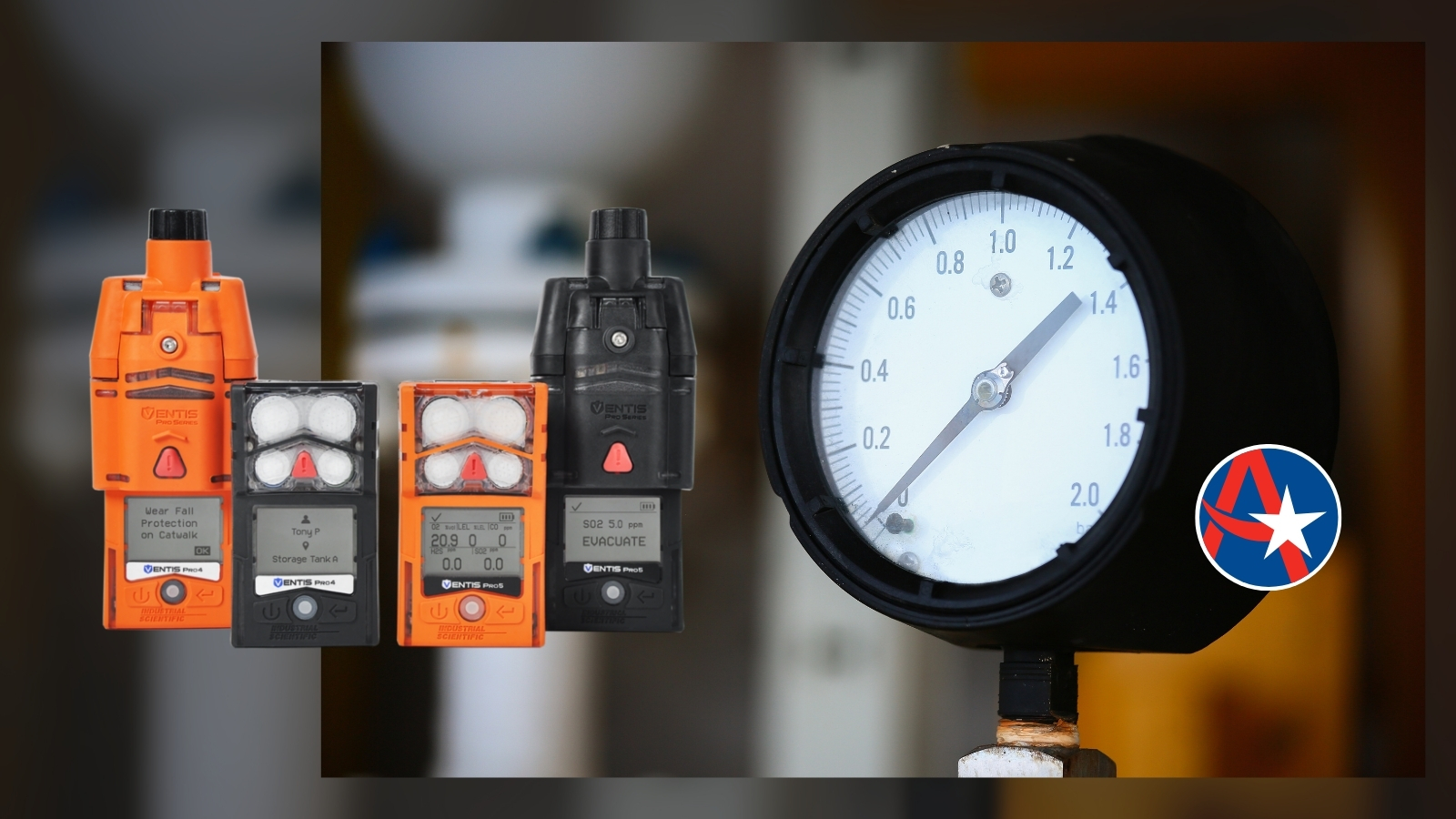
Gas Detector Calibration, Bump Test vs Full Calibration, Best Gases, Shelf Life, Cylinder Sizes, and Common Mistakes
If searching for how to calibrate your gas detector, what calibration gas to use, or how often you should perform a bump test versus full calibration, you’re asking the right questions. Proper calibration is the single most important maintenance step that keeps your monitor accurate and your team safe. Skipped or incorrect calibration is one of the leading causes of undetected gas hazards and OSHA citations. At Apollo Safety, we stock hundreds of fresh calibration gas cylinders, offer same-day shipping on most items, and provide one full year of free expert calibration with every new portable gas monitor purchased from us. This guide answers every common buyer question with clear, step-by-step advice, real-world examples, and direct links to the exact gases and monitors we carry.
What is Calibration and Why is it Critical?
Calibration is the process of exposing your gas detector to a known concentration of test gas so the instrument can be adjusted to read accurately. Without regular calibration, sensors drift over time due to age, temperature, humidity, and exposure to contaminants. OSHA considers proper calibration a core requirement under 1910.146 for confined spaces and under the General Duty Clause for all hazardous atmospheres. In 2025, respiratory protection and hazard communication violations remained in OSHA’s top 10 most-cited standards, with many stemming from uncalibrated or improperly maintained monitors.
Bump Test vs Full Calibration: What’s the Difference?
A bump test (also called a functional test) is a quick exposure to gas that verifies the sensors respond and alarms activate. It takes seconds and should be done before every use. A full calibration adjusts the instrument’s reading to match the exact known concentration of the test gas and should be performed on the manufacturer’s recommended schedule (usually monthly or quarterly). Both use the same calibration gas cylinders. Apollo Safety cylinders work for both bump testing and full calibration.
How Often Should You Calibrate Your Gas Detector?
OSHA recommends a bump test before every day’s use. Full calibration frequency depends on the manufacturer and your risk level:
- Industrial Scientific and RKI recommend monthly full calibration for most models.
- High-risk or high-use environments (confined spaces, refineries, wastewater) may require weekly calibration.
- After any sensor replacement, exposure to extreme conditions, or if a bump test fails, perform a full calibration immediately.
Apollo Safety removes the guesswork by including one full year of free calibration with every new monitor purchase.
What Calibration Gas Do I Need for My Monitor?
The correct gas mixture depends on your detector’s sensors. Here are the most common requests and the exact cylinders we carry:
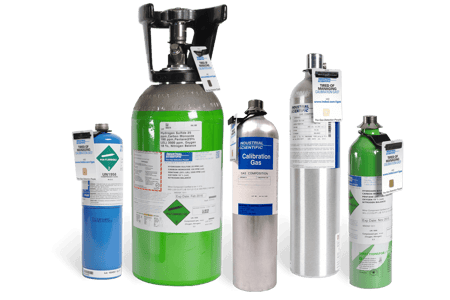
For Industrial Scientific Ventis Pro5 or Tango TX1:
25 ppm H₂S / 100 ppm CO / 2.5% Methane (50% LEL) / 18% O₂ in 58 L cylinder → 58L 4-Gas Cylinder for Ventis
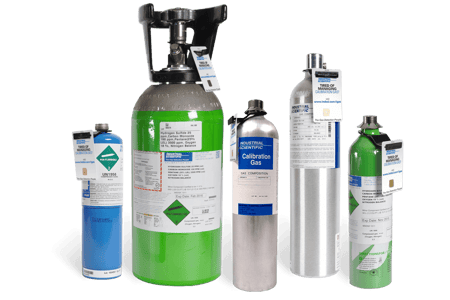
For RKI GX-3R or GX-6000:
25 ppm H₂S / 100 ppm CO / 0.35% Pentane (25% LEL) / 18% O₂ in 58 L cylinder → 58L 4-Gas Cylinder for RKI
For Zero Air:
Zero Air (20.9% O₂) for oxygen sensor zeroing – 34 L steel cylinder → Zero Air 34L
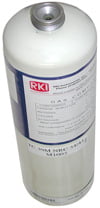
100% Nitrogen for Oxygen Zeroing
100% Nitrogen for oxygen zeroing on certain models – 34 L → 100% Nitrogen 34L
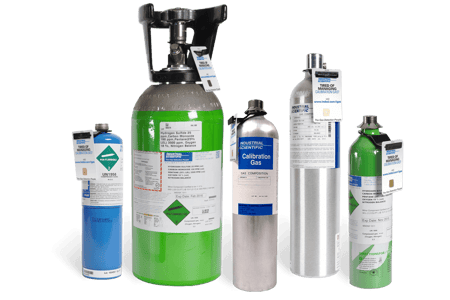
We also stock ammonia, chlorine, SO₂, NO₂, isobutylene (for PID), and large 650 L cylinders for high-volume users.
How Long Does Calibration Gas Last? (Shelf Life Guide)
- Reactive gases (H₂S, NH₃, Cl₂, SO₂) → 8–12 months from manufacture date
- Non-reactive gases (CO, methane, O₂ blends) → 24–36 months
Always check the stamped expiration date on the cylinder. Store upright in a cool, dry place away from direct sunlight and heat.
Common Calibration Mistakes and How to Avoid Them
- Using expired gas → always check the date
- Incorrect flow rate (should be 0.5–1.0 LPM for most monitors)
- Skipping the zero step before span calibration
- Not documenting lot numbers and results (OSHA requires records)
- Using the wrong gas mixture for your specific sensors
Apollo Safety offers free technical support by phone or email, plus one year of free expert calibration with every new gas monitor purchase, so you always have help when you need it.
Real-World Incidents Where Skipped Calibration Caused Fatalities
Real incidents show exactly why proper respirators for mold are not optional, but essential. Even a short exposure in the wrong conditions can lead to serious health issues or regulatory consequences. Here are a few recent examples from construction and manufacturing:
- In 2023, a 34-year-old plumber in Rome, Georgia died after entering a manhole with lethal H₂S levels. The employer had no calibration records for their gas monitor. OSHA issued willful citations.
- In 2024, a Texas refinery H₂S release in a confined vessel killed two workers during maintenance. The CSB investigation noted the monitors had not been properly calibrated.
These tragedies are preventable with routine bump testing and full calibration.
Why Choose Apollo Safety for Calibration Gases and Services?
Apollo Safety specializes in gas detection equipment and calibration gases. We stock a wide selection of calibration gas cylinders in various mixtures and sizes, and we ship most orders the same day or next day. When you purchase a new portable gas monitor from us, we include one full year of free expert calibration (some restrictions apply). Our team is also available by phone and email to answer questions about calibration procedures, gas selection, or any technical support you need. Whether you need a single 58 L cylinder for field use or bulk 650 L cylinders for a service fleet, we focus on making the process straightforward, accurate, and cost-effective.
Browse our full calibration gas selection: https://www.apollosafety.com/calibration-gases/
Contact Apollo Safety today for the right gases, expert advice, and our free calibration program. Protect your people and your operations in 2026 and beyond.