0
0

Fall Protection Systems: Harnesses, Lanyards, and Hoists
If searching for fall protection systems, you are likely looking for reliable ways to prevent the leading cause of fatalities in construction and industrial work. Falls remain the top killer on job sites, with 389 fatal falls to a lower level recorded in construction alone in 2024 according to the Bureau of Labor Statistics. At Apollo Safety, we specialize in complete fall protection systems that make full compliance more affordable for businesses, governments, and military units.
This guide answers every common question, explains each component, shares the latest OSHA and ANSI rules, real-world incidents, and highlights some products we carry to keep your team safe.
What Are Fall Protection Systems and Why Are They Critical?
Fall protection systems are complete engineered solutions designed to either prevent a fall from occurring or to safely arrest a fall if one happens. These systems have become especially important in 2026 as construction, data center builds, warehouse projects, and industrial maintenance continue to involve significant work at height. According to the Bureau of Labor Statistics, falls to a lower level accounted for 389 construction fatalities in 2024, making falls the leading cause of death in the construction industry for the 13th consecutive year.
What Components Make Up Effective Fall Protection Systems?
Effective fall protection systems consist of several interconnected components that must work together to prevent or arrest a fall. Here are the main elements that make up a complete system:
- Anchor Point (Anchorage): This is the secure attachment point that the rest of the system connects to. It must be strong enough to support the forces generated during a fall arrest, typically rated for at least 5,000 pounds per worker.
- Full-Body Harness: Replacing body belts and worn by the worker, the harness distributes fall arrest forces across the shoulders, thighs, and pelvis.
- Connecting Device: This links the harness to the anchor point. It can be a shock-absorbing lanyard or a self-retracting lifeline (SRL). The connecting device plays a critical role in limiting fall distance and reducing impact forces on the body.
- Rescue and Retrieval System: Equipment such as hoists, davits, or self-retracting lifelines with rescue capabilities used to safely retrieve a fallen worker.
These components must be compatible with each other and inspected before each use to ensure the system functions properly when needed. Using mismatched or incompatible equipment is one of the most common causes of fall protection system failure.
What Is the Best Full-Body Harness for Fall Protection in Construction?
The best full-body harness for fall protection in construction is one that distributes fall arrest forces across the shoulders, thighs, and pelvis while still allowing the worker to move comfortably throughout the day. It should feature a dorsal D-ring for fall arrest, adjustable straps, and padding in high-contact areas for all-day comfort. Body belts are no longer acceptable for fall arrest under current OSHA rules and should only be used for work positioning.
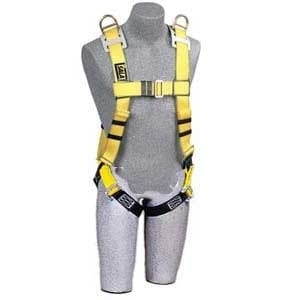
Apollo Safety carries the DBI-SALA 1101828 Universal Delta No Tangle Vest Style Harness, priced at $205.00. This is a reliable vest-style harness with a back D-ring and shoulder retrieval D-rings, making it suitable for general construction and industrial use.
How Do You Properly Use and Wear a Safety Harness?
You properly use and wear a safety harness by first inspecting it for damage before each use. Adjust all straps so the harness fits snugly against the body without restricting movement or breathing. The dorsal D-ring should sit between the shoulder blades. A loose-fitting harness is dangerous, as the worker can slip out during a fall. After donning the harness, always perform a pull test on the straps and ensure all buckles are properly secured.
What Are the Best Lanyards for Fall Protection Systems?
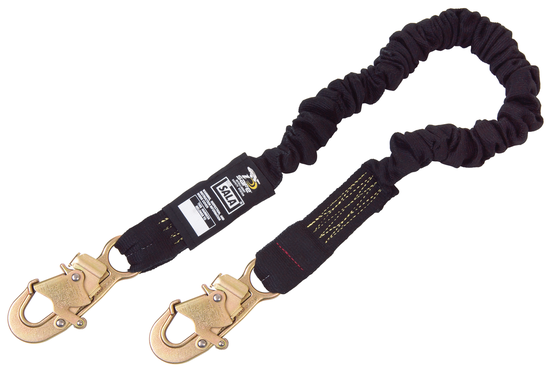
The best lanyards for fall protection systems are those that absorb energy during a fall to reduce the forces transmitted to the worker’s body. Shock-absorbing lanyards are commonly used for general construction work, while self-retracting lifelines (SRLs) are often preferred when fall clearance is limited because they arrest a fall much more quickly than a traditional lanyard.
Apollo Safety carries the DBI-SALA ShockWave2 series of shock-absorbing lanyards. For electrical environments, they offer the DBI-SALA ShockWave2 Arc Flash Shock-Absorbing Lanyard (Model 1244610), priced at $278.00. This model is arc-rated and suitable for both fall protection and electrical safety requirements.
How Do Hoist and Davit Systems Work in Fall Protection?
Hoist and davit systems work in fall protection by providing a stable, engineered anchor point for both fall protection and rescue operations. These systems are particularly useful in confined spaces, tanks, or elevated work areas where traditional anchor points are not available. OSHA requires employers to have a prompt rescue plan in place, making these systems an important part of a complete fall protection program.
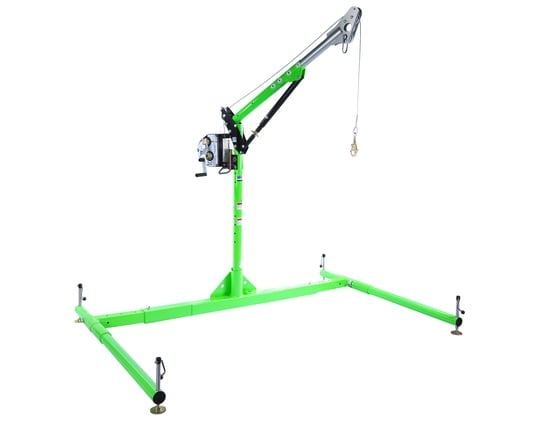
Apollo Safety carries the DBI-SALA Advanced 5-Piece Hoist System with Adjustable Davit Mast, priced at $2,850.00. This system is commonly used in construction and industrial settings for both positioning and emergency rescue.
What Are the Latest OSHA and ANSI Rules for Fall Protection?
The latest OSHA and ANSI rules for fall protection in 2026 require fall protection at 6 feet or more in construction (29 CFR 1926 Subpart M) and 4 feet in general industry. The updated ANSI/ASSP Z359.1-2024 Fall Protection Code provides more detailed requirements for fall protection programs, equipment selection, training, and rescue planning.
Key requirements include conducting a fall hazard assessment before work begins, providing training to all exposed workers, ensuring proper fit of personal fall arrest systems, maintaining a written rescue plan, and inspecting all equipment before each use. Employers who fail to meet these requirements can face significant OSHA citations and penalties.
Real-World Incidents: When Fall Protection Systems Made the Difference
Real-world incidents clearly demonstrate both the life-saving value of fall protection systems and the serious consequences when they are missing or misused. In 2024, falls to a lower level remained the leading cause of construction fatalities, with 389 workers losing their lives. In contrast, multiple fatalities have occurred on data center and warehouse construction projects where workers either had no fall protection or were using damaged or improperly fitted equipment.
These incidents reinforce why having a complete, inspected, and properly used fall protection system is essential — not just for compliance, but to protect lives.
Why Choose Apollo Safety for Fall Protection Systems?
Fall protection systems are essential for protecting workers who perform tasks at height. Apollo Safety specializes in safety equipment with a strong focus on fall protection, gas detection, and protective workwear. Our team helps you select the right harnesses, lanyards, and hoists based on your specific needs and hazard levels.
Contact Apollo Safety today for expert advice and the right equipment to protect your team.