0
0

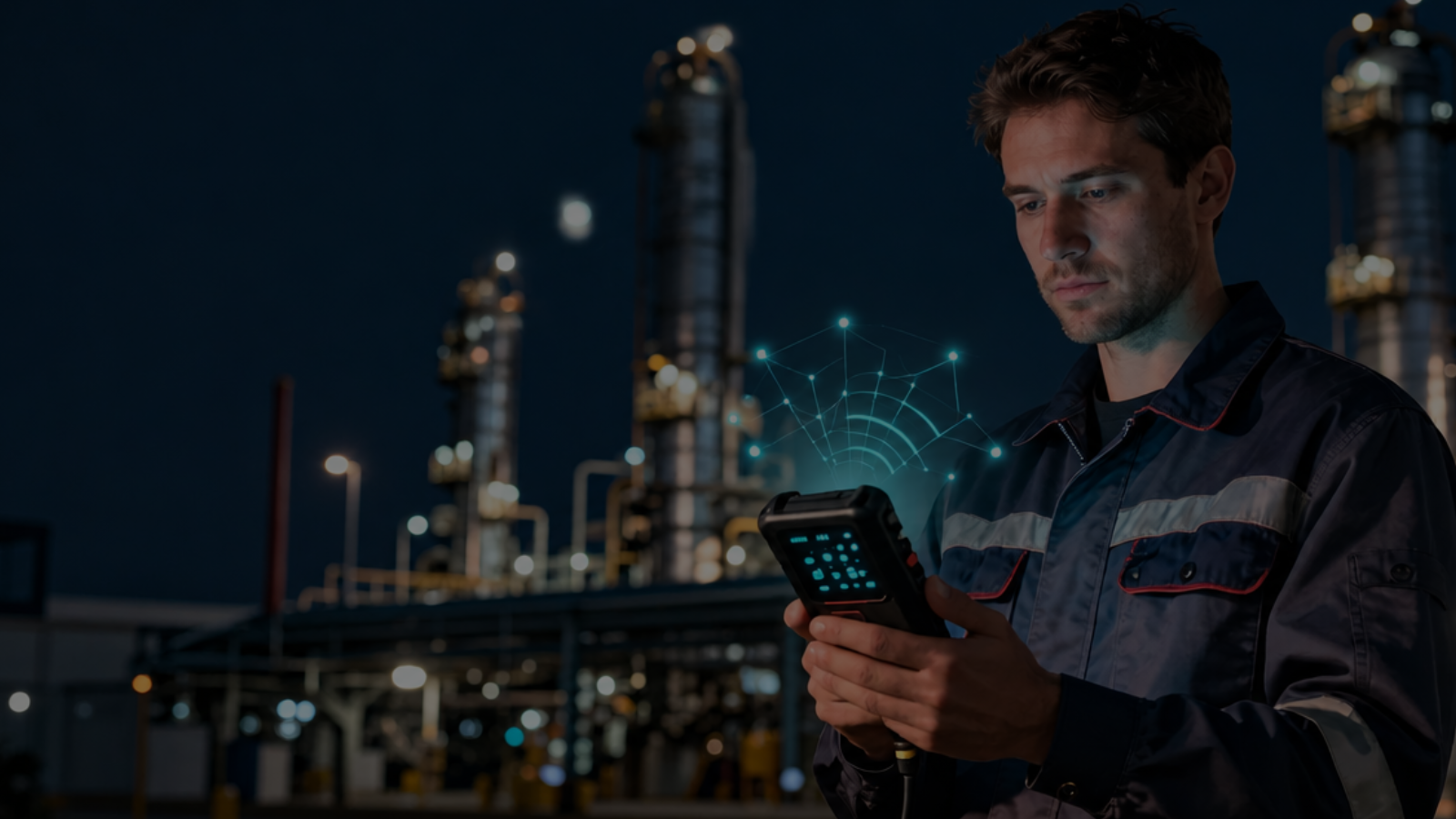
Remember when gas detectors were just meters? Simple handheld devices that beeped when they smelled trouble, got calibrated, and lived on a bench between inspections. Those days are gone. In 2026, the workplace safety industry is undergoing its most dramatic transformation in decades, and it has everything to do with connectivity.
Connected gas detection isn’t just a marketing buzzword anymore. It’s reshaping how safety professionals manage risk, monitor workers in real time, and build data-driven safety programs from the shop floor to the boardroom. Here’s what you need to know about the connected safety ecosystem, and why it matters to your operation.
What Connected Gas Detection Actually Means
Connected gas detection refers to portable monitors that transmit their readings wirelessly to a central platform. Instead of waiting for workers to clip in their detectors at the end of the shift, download data via USB cable, and manually upload CSV files, modern safety managers can watch real-time gas exposure data from anywhere.
The technology behind connected gas detectors includes Bluetooth Low Energy (BLE) for short-range communication, Wi-Fi for facility-wide coverage, and cellular networks for remote workers in fields, tanks, and rural operations. Many newer monitors offer all three connectivity options, letting organizations choose the right approach for each scenario.
What Data Does a Connected Gas Detector Actually Send?
It’s not just gas readings anymore. Modern connected monitors transmit:
- Real-time gas concentrations (O2, LEL, CO, H2S, VOCs)
- Low-battery alerts and automatic power-off warnings
- Man-down events and tilt sensors
- Calibration status and bump-test history
- Worker location data (when paired with GPS-enabled platforms)
- Exposure summaries and time-weighted averages (TWAs)
- Environmental conditions like temperature and humidity
This flood of actionable data transforms a simple safety instrument into the heartbeat of your entire workplace monitoring program.
Why Connected Safety Matters to Your Bottom Line
The business case for connected gas detection goes far beyond “knowing what’s happening.” According to recent industry analyses, companies that transition from paper-based calibration logs and manual data downloads to connected safety platforms report measurable improvements across multiple metrics.
Fewer missed calibrations. Connected systems send automated alerts when detectors are due for bump tests or calibration, eliminating the human error of “did we remember to check it?” Reduced downtime during incidents because supervisors can see exactly where a problem is occurring and respond faster. Better compliance documentation with automatic timestamped records that satisfy OSHA auditors without chasing down missing signatures.
Industry Data Confirms the Shift
The portable gas detection equipment market is being reshaped by digitalization, IoT integration, and regulatory pressure. Market intelligence shows that connected gas detector adoption has accelerated dramatically since 2024, driven by broader industrial safety mandates and the availability of affordable cloud platforms.
Manufacturers have responded in kind. Industrial Scientific’s Ventis Pro5 cellular monitor lets remote workers stay connected even in the most isolated locations using its LENS wireless technology for team alerts. MSA’s ALTAIR io series pairs with its Grid Monitor app, enabling real-time fleet management from a smartphone or desktop. Honeywell’s BW Solo and ToxiRAE lines now include connectivity options that integrate directly into enterprise safety software ecosystems.
What Apollo Safety Carries in the Connected Ecosystem
At Apollo Safety, we’ve been watching these developments closely — not just as suppliers of equipment, but as partners who understand how connected technology solves real problems on real job sites. We carry a full range of gas detectors with wireless, data logging, and man-down options.
Our inventory reflects what today’s forward-thinking safety managers need:
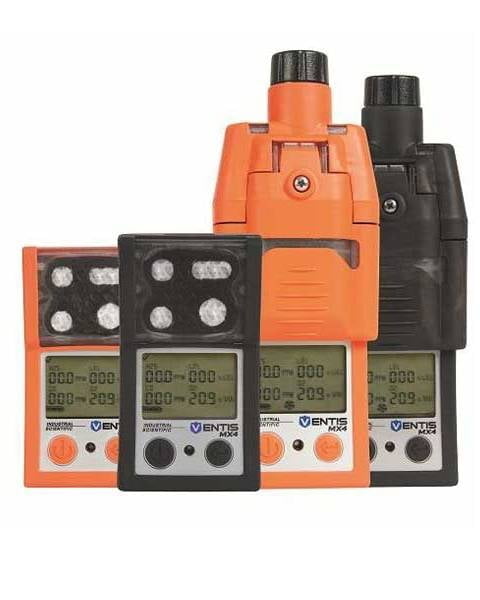
Industrial Scientific Ventis MX4 — Connected Multi-Gas Detection
The Ventis MX4 is one of our most popular multi-gas monitors. It detects up to four gases simultaneously (LEL, CO, H2S, O2) and comes with flexible sensor options for combustible and toxic gas detection across a broad range of settings. Available in multiple configurations including models with Li-ion batteries, desktop chargers, and optional pumps — making it ideal for both personal protection and confined space entry.
Starting around $958.00 depending on configuration, the Ventis MX4 bridges the gap between traditional safety monitoring and connected data collection. It features USB connectivity for desktop charging stations with automatic data sync, and models are available with integral pumps for remote sampling in confined spaces.
Shop Industrial Scientific Ventis MX4 Monitors →
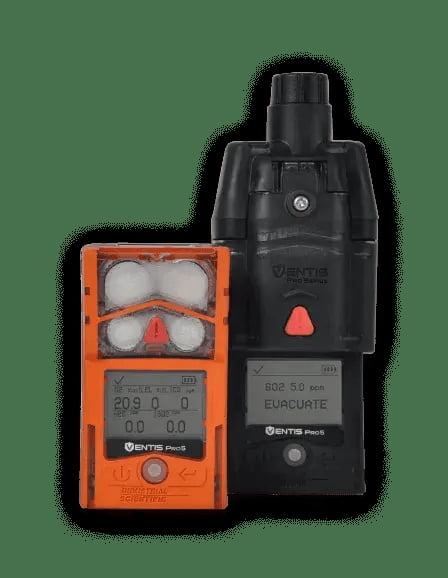
Industrial Scientific Ventis Pro5 — Cellular-Connected Intelligence
For the most advanced connected experience, the Ventis Pro5 features built-in cellular connectivity and LENS wireless technology that provides real-time team alerts even in remote locations where cell service may be limited. It’s our top recommendation for organizations managing large, distributed workforces across multiple sites.
Priced at approximately $3,894.00 (for models with NH3 sensor and integral pump), the Ventis Pro5 includes LEL (pentane), CO/H2S, and configurable toxic gas sensors with extended-range lithium-ion battery packs and desktop chargers for comprehensive monitoring in the harshest environments.
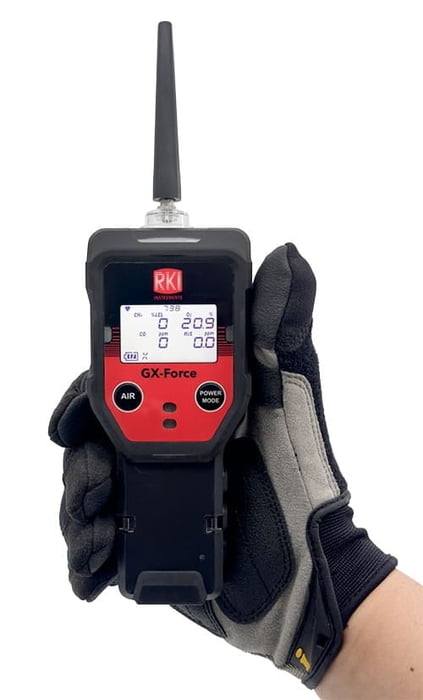
RKI GX-Force — Data Logging with USB Connectivity
The RKI GX-Force delivers high-precision LEL sensors paired with wireless connectivity, ensuring teams get alerted the moment gas levels spike. It features a USB A to USB C data downloading cable, belt clip, and comes with a 100-240 VAC charger — making it ideal for both fixed-base monitoring and mobile applications.
Starting around $905.00, this detector bridges the gap between traditional data logging and fully connected monitoring. It detects four gases: LEL, O2, H2S, and CO, with a 5′ hose with probe for remote sampling in tight spaces.
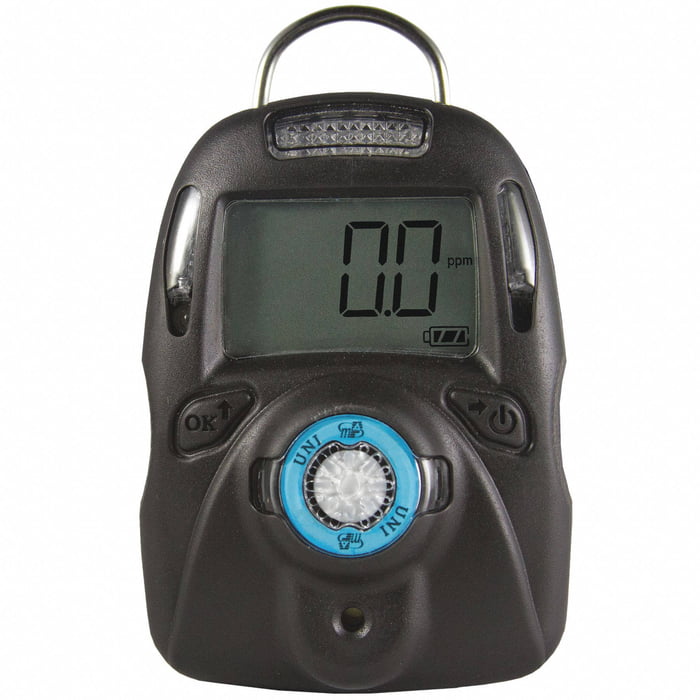
mPower Electronics UNI MP100 — Simple Reliable CO Monitoring
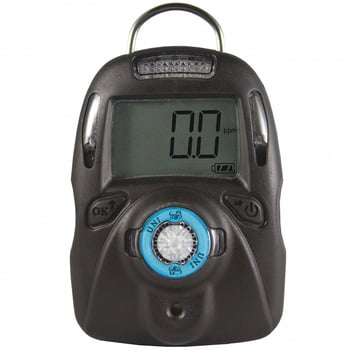
For operations that need straightforward single-gas detection with exceptional battery life, the UNI MP100 carbon monoxide monitor delivers reliable performance with UL Class I/II/III certification. At approximately $125.00 (down from $168.00), it’s an excellent entry point for organizations beginning their connected safety journey or deploying to large workforces where budget-conscious decisions are critical.
The UNI MP100 is specifically highlighted as a critical tool for first responders and emergency services moving through smoke-filled zones where rapid CO detection is essential [5]. It features long battery life — often lasting the entire shift without needing a recharge.
RKI GX Series — Versatile Multi-Gas Options
The RKI GX line offers multiple configurations from 2-gas to 5-sensor monitors, all with data logging and optional wireless connectivity. Models like the GX-2001 include hard hat clips and come with 12 VDC chargers for continuous readiness [3]. The broader RKI lineup includes models such as the GX-3R for confined space entry and the GX-6100 for applications requiring PID-based VOC detection alongside standard four-gas monitoring.
What to Look for When Evaluating Connected Gas Detectors
If you’re considering upgrading your gas detection program, here are the factors that matter most:
- Connectivity Standards: Does the detector support the protocols used by your existing safety software? Common standards include BLE, Wi-Fi, proprietary dongles, and cellular. Ensure compatibility before purchasing. Look for monitors like the Ventis MX4 that integrate seamlessly with desktop charging stations for automatic data sync.
- Platform Integration: Not all monitoring platforms are created equal. Some offer basic data logging while others provide AI-driven risk analytics, workforce heat maps, and predictive maintenance scheduling.
- Battery Life: Connected features drain batteries faster. Evaluate runtime at full connectivity versus power-saving modes. Most modern detectors deliver 12+ hours in BLE mode and up to 24 hours when using periodic sampling. The mPower UNI MP100 is designed for all-day battery life even with continuous monitoring.
- Ruggedness Ratings: A connected detector that can’t survive a drop or resist moisture isn’t worth the premium. Look for IP65 or higher ingress protection ratings and MIL-STD compliance. The Ventis MX4 features durable construction suitable for demanding environments.
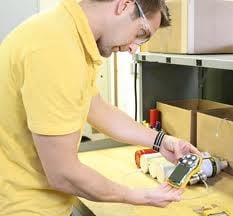
- Ease of Calibration: The best connectivity system in the world doesn’t matter if recalibrating becomes a chore. Ensure the platform supports automated bump-test reminders and calibration certificates.
Explore Our Calibration Services →
Real-World Applications Driving Adoption
Several industries are leading the connected gas detection charge:
- Oil & Gas: Remote well sites and pipeline monitoring stations use cellular-connected monitors to transmit readings back to control rooms hundreds of miles away. This eliminates the need for daily physical inspections while improving emergency response times. The Ventis Pro5’s built-in cellular connectivity makes it ideal for these applications.
- Construction: Large commercial projects with dozens of simultaneous work zones deploy Wi-Fi-enabled detectors that create real-time exposure maps across the entire job site. The RKI GX-Force with its wireless alert capability ensures that safety managers at construction sites get notified immediately when gas levels exceed thresholds.
- Manufacturing: Chemical and processing plants use connected systems to track worker movements through hazardous areas and generate automated compliance reports for OSHA inspections. Industrial Scientific monitors like the Ventis MX4 provide the data logging needed for these comprehensive records.
- Emergency Services: Fire departments, hazmat teams, and search-and-rescue units rely on peer-to-peer connected monitors that form ad hoc mesh networks when cell service drops offline. The mPower UNI MP100 is specifically highlighted as a critical tool for first responders moving through smoke-filled zones where rapid CO detection is essential.
The Future: AI, Predictive Analytics, and Beyond
Connected gas detection is just the foundation. The next wave includes artificial intelligence analyzing historical exposure data to predict high-risk periods before incidents occur. Machine learning algorithms are being trained on millions of sensor readings to identify subtle patterns that human observers miss, like gradual sensor drift or early warning signs of equipment failure.
We’re also seeing the integration of connected gas detectors with other worker safety technologies: smart hard hats with embedded sensors, exoskeletons that monitor ergonomic stress, and environmental monitoring systems tracking heat, noise, and particulate matter simultaneously. The result is a holistic picture of worker safety that no single instrument could provide on its own.
Making the Transition — Without Disrupting Your Safety Program
Switching to connected gas detection doesn’t require replacing your entire fleet overnight. Most organizations begin by equipping high-risk work groups first, then expand as they see the value. Our recommended approach:
- Audit your current detection needs and identify 2-3 pilot use cases
- Select detectors with connectivity options that match your existing software infrastructure — our team can help evaluate compatibility across the Ventis MX4, Pro5, RKI GX, and mPower product lines
- Subscribe to a monitoring platform and onboard your safety team with training
- Run a 90-day pilot program tracking metrics like calibration compliance, incident response times, and reporting efficiency
- Scale based on results
Apollo Safety makes this process seamless. Our technical support team can help you evaluate connectivity options, configure platforms, and ensure your existing equipment integrates correctly — all while keeping the one-year free calibration benefit intact. We also offer rental programs for short-term projects if you want to test connected monitors before committing to purchases.
The Connected Advantage Is Here Today
This isn’t a vision of safety technology five years from now. Connected gas detection is available right now, deployed on thousands of job sites all around the world. The question isn’t whether to adopt connected safety platforms, it’s how quickly you can start reaping the benefits.
At Apollo Safety, we’re committed to keeping your workforce protected with the latest tools and technology. Whether you need a single connected monitor or a fleet-wide deployment, our inventory covers every major platform on the market, and our expert calibration services ensure your investment performs at its best. We specialize in supplying and servicing gas detection monitors from trusted brands including Industrial Scientific, RKI Instruments, mPower Electronics, and DBI-SALA.
Ready to Upgrade Your Gas Detection Program?
Contact our safety specialists today to discuss which connected monitors and platforms are right for your operation.
Browse our full selection of connected multi-gas monitors including the Industrial Scientific Ventis MX4, Ventis Pro5, RKI GX-Force, and more:
- Shop Portable Multi-Gas Monitors →
- Shop Single-Gas Monitors →
- View Gas Monitor Calibration Services →
Call us at 800-813-5408 or visit our the specific product for detailed specifications.